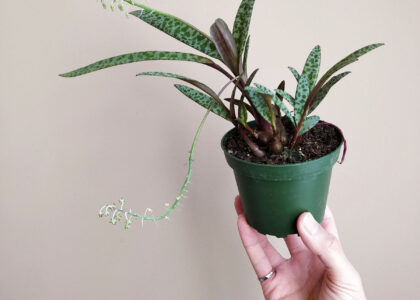
Scientific Name: Ctenanthe burle-marxii Common name: Fishbone prayer plant
Experience: Enjoying this plant since 2018.
Ctenanthe burle-marxii, often called the “Fishbone Prayer Plant,” is one of those plants that rewards patience and consistency more than perfection. I’ve grown mine since 2018, and over the years it has lived through apartment lighting, house lighting, summers outdoors, winters under grow lights, and the usual cycles of pruning and repotting.
What follows isn’t a list of rules – it’s a record of what has actually worked. I purchased my Ctenanthe burle-marxii in 2018 as a fairly compact 6″ nursery pot. Within a few months, the leaves began yellowing and paling – not a mysterious “problem,” but simply the plant telling me it had outgrown its pot. When I finally unpotted it, the root ball was extremely tight.
I moved it into an 8″ pot with fresh soil, and over the next several months, the plant became noticeably fuller and greener. Since then, it has lived several years indoors in typical Toronto home conditions, spent summers outdoors in a shaded spot, returned indoors for winters under a minimal grow-light setup, and gone through regular cycles of pruning to keep it looking clean and intentional.
Through all of this, the plant has proven resilient, adaptable, and surprisingly tolerant of less-than-ideal humidity, as long as it continues to grow new leaves.
Cutting Off Dead Foliage
I regularly remove yellowing or browning leaves. I don’t dwell on why each leaf dies – every leaf has a lifespan, and if I’m confident in the overall growing conditions, then occasional decline is normal. Removing dead foliage:
- Keeps the plant looking tidy
- Helps you focus on the overall health rather than individual imperfections
- Reinforces the mindset that growth – not leaf preservation – is the goal
Ctenanthe burle-marxii doesn’t shed leaves rapidly, so this maintenance is occasional rather than constant.
Humidity: What It Actually Means for This Plant
At one point, I measured my indoor humidity at 28% RH – a number that would send many plant owners into a panic. But here’s the trap: believing that crispy tips mean you must raise humidity, and that with “high enough” humidity, you’ll never see a brown edge again. My approach is simply to accept whatever humidity I have, focus on consistent growth rather than perfect leaves, and prune older leaves when they eventually decline. This plant does not have a high rate of leaf turnover, so even in dry indoor air, it remains presentable for long stretches.
Lighting Strategies
Ctenanthe burle-marxii can adapt to a wide range of light conditions, but the amount of growth varies dramatically depending on the strategy. Below are recommendations and my actual setup for the following lighting contexts: 1) Indoor Natural Light, 2) Outdoors, and 3) White LED Grow Light.
Indoor Natural Light Recommendation:
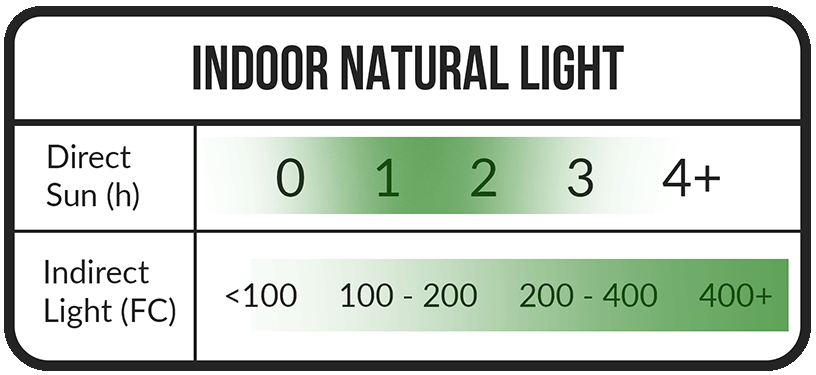
When the sun is elsewhere in the sky, your indirect light should still reach 200–400 FC at minimum. The plant can tolerate 1–2 hours of direct sun, possibly more if you can keep up with watering and prevent the leaves from reaching the curled stage.
My Indoor Lighting Setup:
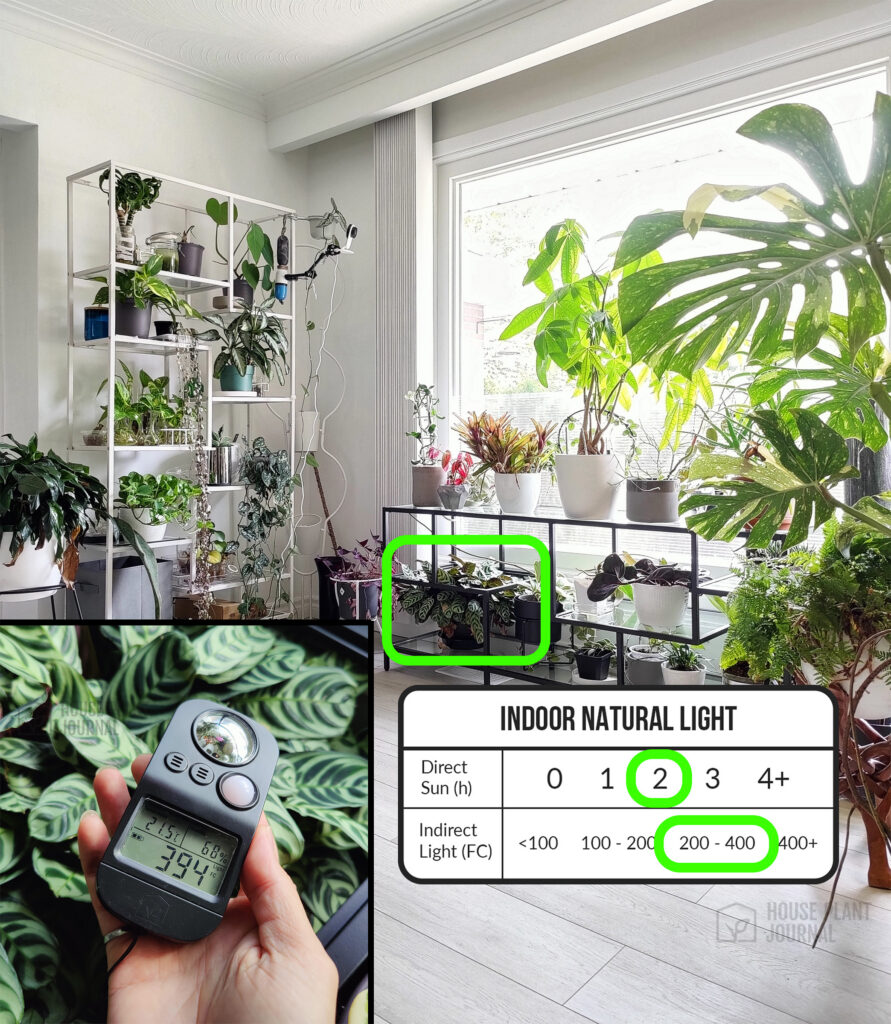
Get to know your actual light situation:
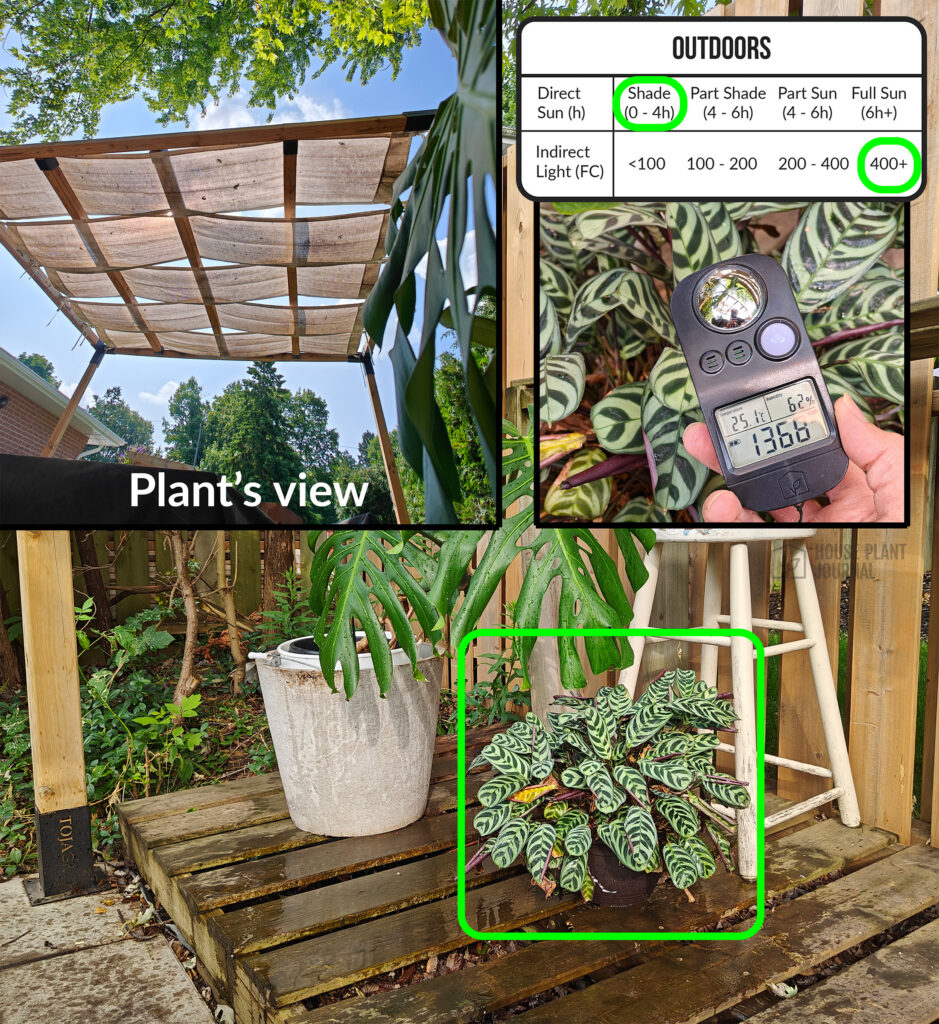
Summer Outdoor Boost The best growth I’ve ever seen came from summers outdoors. I place the plant in Shade, meaning 0–4 hours of direct sun. Warm temperatures combined with bright ambient light produce strong, lush growth. I bring the plant indoors before nighttime temperatures drop to 10°C (50°F), which in Toronto usually happens around October.
My Outdoor Lighting Setup:
Light Recommendation for Outdoors:
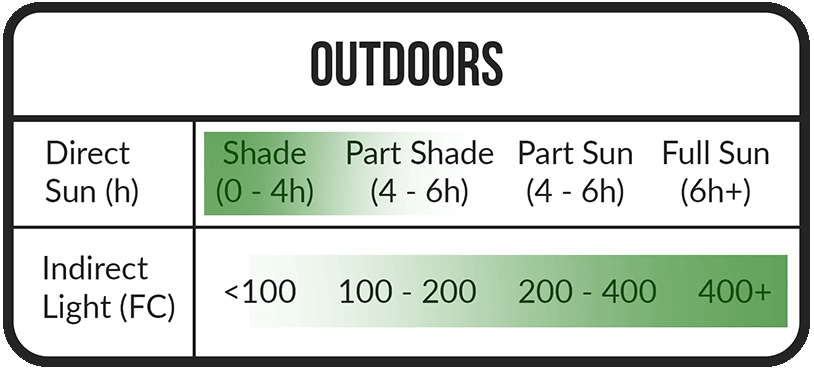
For the Outdoor lighting context, put your Ctenanthe burle-marxii where it will be mostly shaded by trees all day – this is the Shade category in gardening.
Grow Light Strength Recommendation:
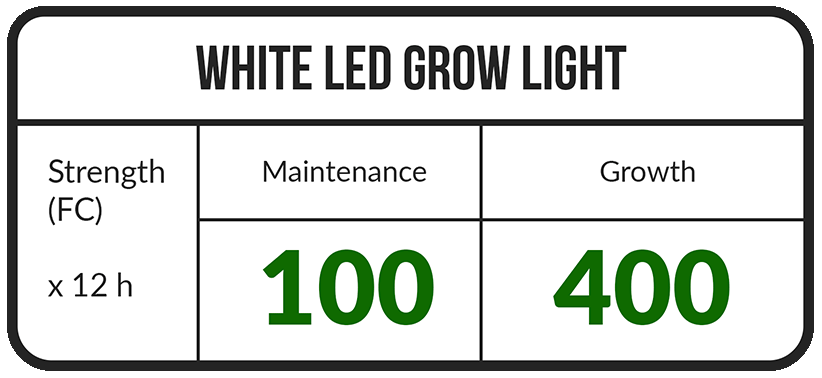
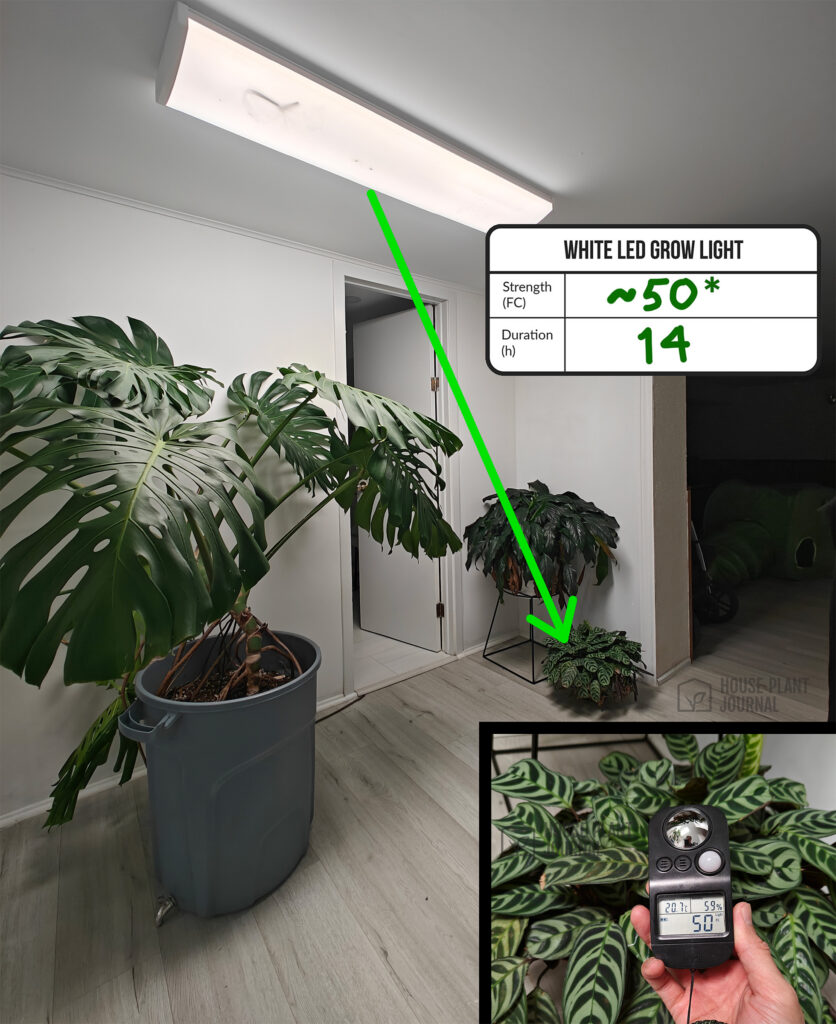
If you’re just maintaining the Ctenanthe for the winter, 100 FC x 12 hours from a white LED light will maintain a good leaf pattern although I’ve gotten away with down to just 50 FC x 14 hours. The resulting DLI from 100 FC x 12h is around 0.9 mol/day.
To push for good growth, getting up beyond 400 FC x 12 hours would get you a DLI of 3.5 mol/day.
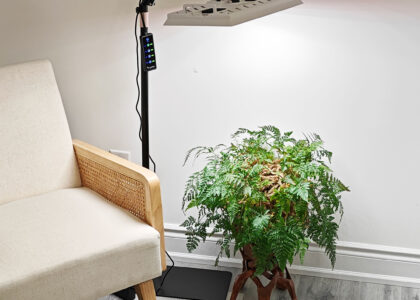
My Grow Light Setup (Note: not ideal)
Watering: New Leaves vs. “I Need Water Now!”
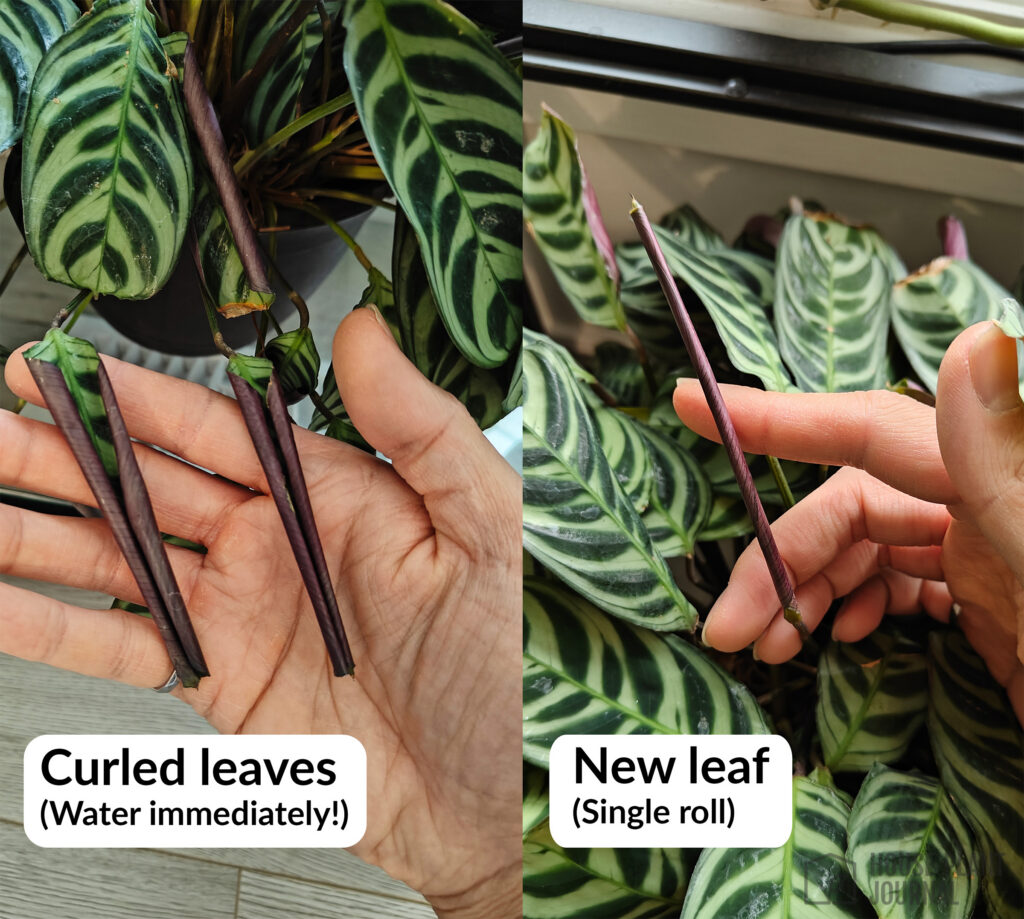
Understanding leaf behavior is key. New leaves appear as a single tight roll emerging from the base. When the plant is in urgent need of water, both outer edges of the leaf begin to curl upward, first loosely and then tightly if dehydration continues. This curling is a warning – it should not be taken as your regular sign to water.
My regular watering strategy is to let the soil dry to about halfway down and then water thoroughly. I do not wait for leaf curling as my cue, but if I see it, I water immediately. Thankfully, the plant is resilient and recovers well from these episodes.
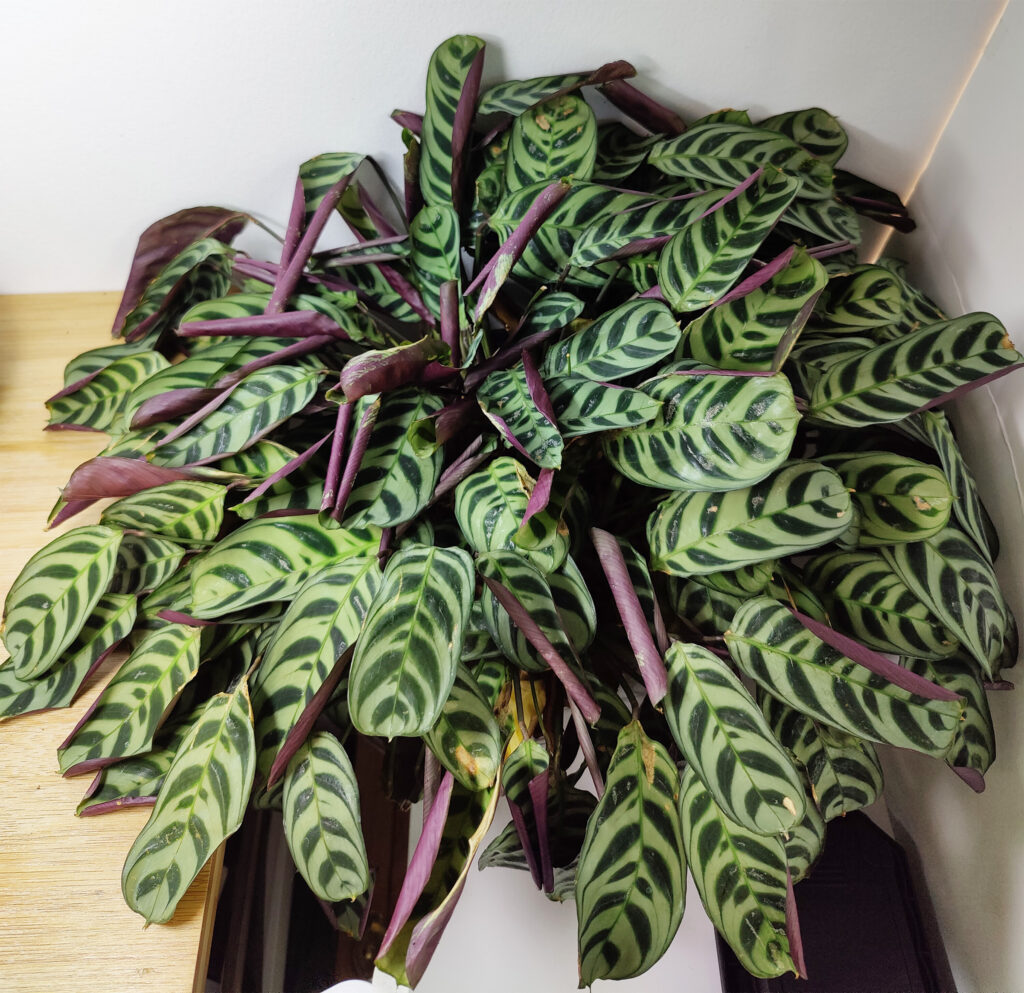
Here’s the overall plant in a very thirsty state: many leaves have both edges curled up.
Occasional Showering and Pruning
Every so often, I give the plant a gentle shower to remove dust and refresh the foliage. Combined with periodic pruning, this keeps the plant looking vibrant and intentional.
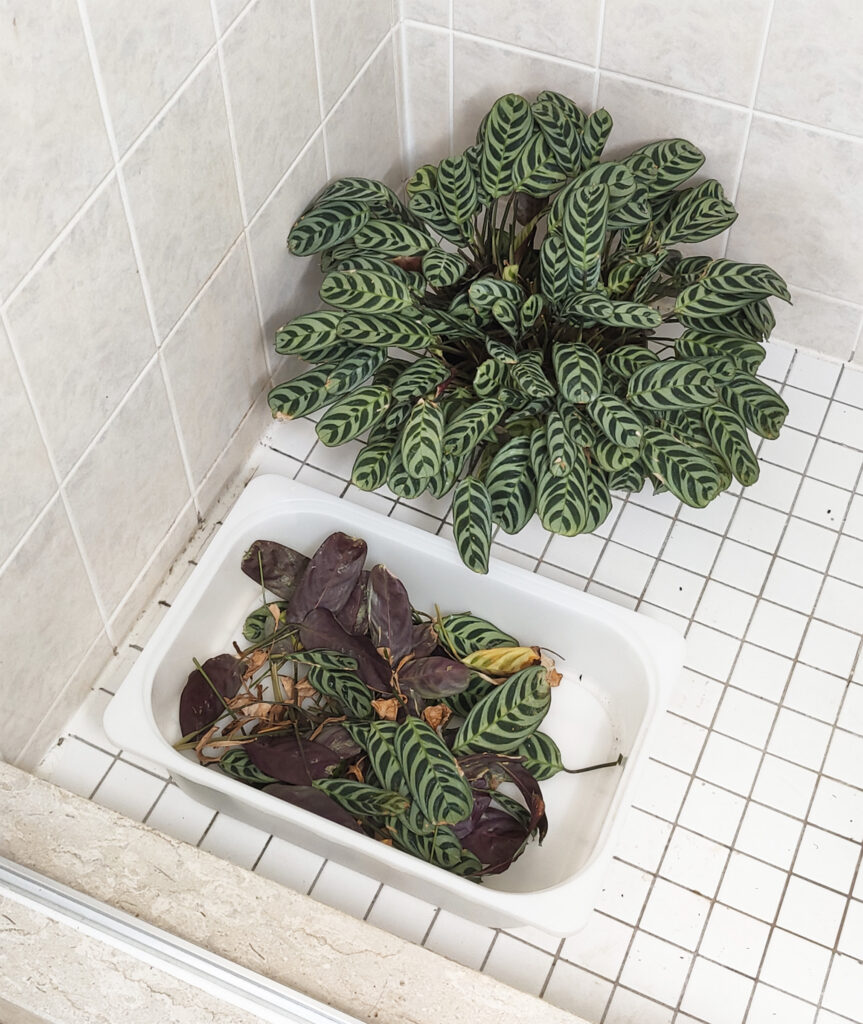
Here’s why adequate lighting is key to a “nice looking” plant: my plant grows enough new leaves that I can cut off blemished leaves (even slightly blemished), which results in the overall plant looking flawless. In poor lighting, you won’t get as many new leaves while older ones keep dying at the same rate – the plant eventually looks scraggly and thin.
Fertilizer
As with all foliage plants, the ideal NPK ratio is 3-1-2. You can use a liquid diluted into your watering can or a slow-release fertilizer left in the substrate.
Substrates
Typical potting soil with some added bark chips. A 2-3 parts soil to 1 part bark will work fine. Don’t make the substrate too porous since this plant needs the water retention time.
Final Thoughts
Ctenanthe burle-marxii is a plant that rewards consistency and realistic expectations. It won’t give you flawless leaves forever, but it will give you steady, attractive growth if you provide moderate, reliable light, water before dehydration becomes severe, accept natural leaf aging, use outdoor summers or strong grow lights to boost growth, and keep the plant tidy with occasional pruning. After nearly a decade with this plant, I’ve come to appreciate its resilience and its willingness to adapt to real home conditions, not idealized ones.
Grow light strength recommendations by plant: HERE
Indoor natural light requirements by plant: HERE
If you’re interested in learning better plant care fundamentals, I wrote two books I think you’ll enjoy: ‘The New Plant Parent’ and ‘The New Plant Collector’