
Save my snake plant!
Plant Parent
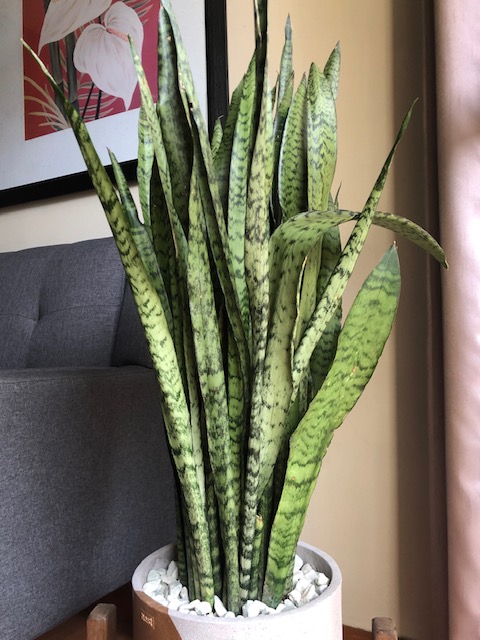
I messaged you on Instagram in a panic because I found spots on the leaves of my snake plant.
I’ve been testing the soil using a stick. Today the bottom part of the stick (lower 1/4 part of the pot) still feels a bit damp. I’ll wait until the stick is completely dry before I water. Please let me know if this is correct.
Also, I’ve observed that some leaves have started to fold inward lengthwise and one has bent crosswise. Is this normal?
Appreciate your response and I hope to hear from you about how to help my snake plant become healthy.
Darryl
1) How long have you had the plant?
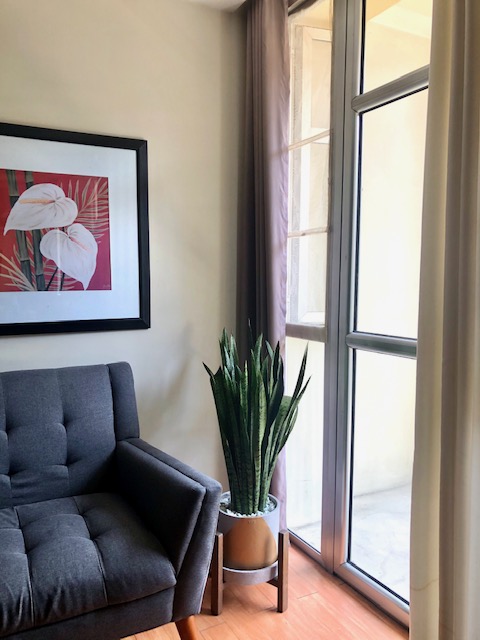
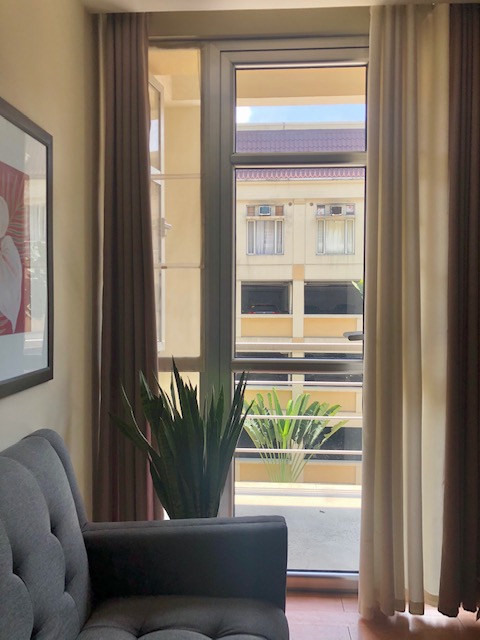
2) Show me the overall space where the plant lives
Plant Parent
1. About a month
2. Here are the photos of its area:
Darryl
The damaged areas will never actually “heal” so if they bother you, cut off those leaves. Unfortunately, there’s no “fixing” them. To lower the chance of more of them appearing, ensure you’re letting excess water drain away or, if there’s no drainage hole, don’t pour more than one quarter the total volume of the soil.
Snake plant leaves sometimes will grow in different shapes compared to the leaves you first got them with because your interior space is just a fraction of the light that a nursery has (where those leaves developed). Different leaf shapes are to be expected.
Tired of your houseplants dying on you?
Sign up and I’ll do my best to help them live their best lives!
Good House Plant
My three snake plants are curling in.
If I water them, they are still in the same
condition. Why is this?
It could be that the root system is damaged or it was not watered thoroughly enough. If you’d like me to take a look, please fill in the following survey: http://www.houseplantjournal.com/help
Kathleen, curling by itself is not a reliable water-now signal. First pair it with the soil and leaf texture. If the mix is dry throughout, the pot feels light, and the leaves are still firm but folded inward, water thoroughly once and let all excess drain. If the soil is damp, or the leaf bases are yellow, soft, or sour-smelling, do not add more water; slide the root ball out and look for black or mushy roots before deciding what to remove.
Also inspect the leaf undersides and grooves for fine webbing, stippling, or cottony deposits. If only new leaves are narrower while older leaves stay firm, lower light can be shaping the new growth rather than an acute watering problem. Because there are no photos here, I would avoid cutting or repotting until the soil, roots, and pest signs point to a cause.
I work on KnowYourPlant, and this snake-plant guide lays out the same symptom checks in order: https://knowyourplant.app/blog/posts/snake-plant-care-guide/
I have the same question as the last person. I thought they liked low light areas… but I see these beauties in what appears to be bright, indirect light. Can someone clarify which is it? Also, what do you do when they get so tall they start to fall over? I noticed that when this happens it lifts them and their roots get exposed. Should I be planting deeper?
They don’t like low light areas – they just die slower and less noticeably than other plants in low light areas. When new leaves grow from a snake plant, they will reflect their current light situation (which is usually far worse than at a nursery), so the new leaves will grow tall and skinny – and they are very susceptible to bending. You can support them with a small stake or just cut them off.
hi Darryl I have 5 snake plants, 1 yucca and 1 zz plant. I usually water all of them about 2 times a year.
So far they are looking healthy.
On occassion I wipe down the leaves to remove any dust.
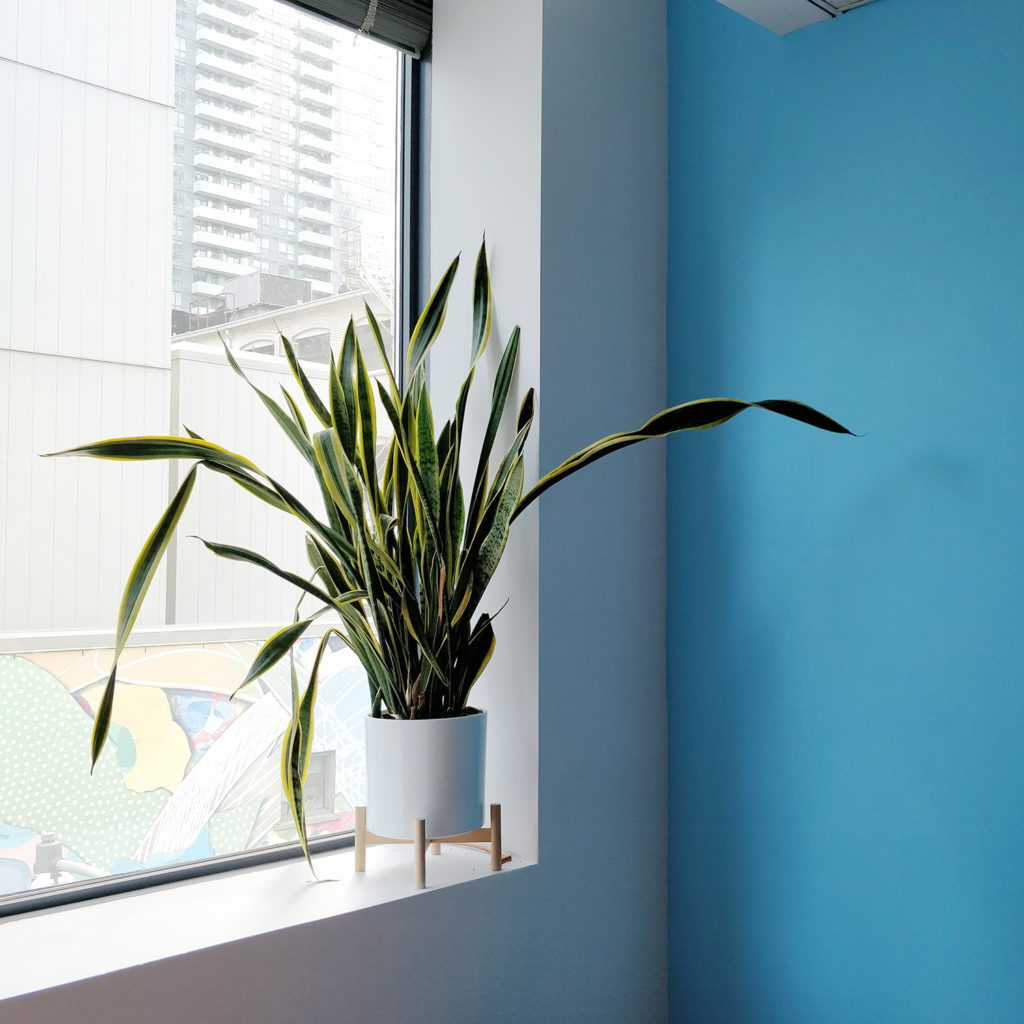
Hi, I always read that snake plants actually enjoy a shadier corner / part of the room. I see you both positioned your snake plants very close to your windows. Is this what you would recommend?